
Condition: New
Guarantee: 1.5 a long time
Applicable Industries: Producing Plant, Farms, Retail, Design works
Showroom Location: None
Kind: Shafts
Use: Tractors
Title: Large Good quality Tractor Spare Parts pto Shaft for Kubota
Software: Farm Tractor
Content: Metal
Shade: Gray
Brand name: kubota
Good quality: High-Good quality
Bundle: Picket Carton
MOQ: one hundred Pcs
Approach: Precision Casting
Sample: Obtainable
After Warranty Services: Video complex support, Online support
Neighborhood Service Location: None
Packaging Information: Wooden Carton
Port: ZheJiang /HangZhou
Reduced Value pto Generate Shaft CZPT pto Shafts
| Matériel | Carbon Metal, Stainless Metal, Copper, Brass or as You Essential |
| process | Machined, Casting, Hobbing |
| Heat Remedy | High Frenquency Quenching and Difficult Enamel |
| Performance | High precision, higher wear resistance, lower sounds, clean and continual, high strength |
| Surface Therapy | Blacken or Galvanized as You Necessary |
Advantages:1. Higher precision2. ISO normal bearing seat cover3. Large quality and copmetitive price4. Numerous well-known brand name can be available5. Lower sound and prolonged lifestyleWarehouse Packing & Supply Associated Products Business ProfieOur factory is a globally acknowledged manufacturer and exporter. We have our personal manufacturing unit with doing some areas of harvester. And we also can get all the other spare elements of them. All products are made beneath rigorous common of high quality manage. Principal merchandise are all types of harvester and tractor spare elements,this kind of as engine areas, undercarriage areas, rubber track, shafts & gears, and other tiny components. Our productions are exported to a lot of nations like Egypt, India, Pakistan, Malaysia, Tanzania, Kenya, Sri Lanka, Myanmar, Ecuador, Indonesia, Peru, Thailand, Vietnam, Morocco and other nations of Southeast Asia, the Center East.For additional information, get in touch with us now! FAQQ:Do you give samples?A:Samples will be shipped to you initial for approval ahead of manufacturing.Q. Are you trading company or maker?A. We are producer Positioned in HangZhou Metropolis of East China.Q: Reaction time?A: Reply quite before long, and reply in 12 several hours at any time.Our technicians are often jointly with salesmen, so your any queries can be replied very before long.Q: Trade phrases?A: FOB, CFR, CIF, FCA, CPT, CIP, DDU, DDP etc. are all recognized.
Screw Shaft Types
If you’re looking for a screw shaft, but aren’t sure which type to buy, you’re in luck. In this article, we’ll talk about the different types, including Threaded shank, Round head, and Machined. Once you’ve read it, you’ll know which type to buy. Then, you can decide whether you want a ball screw nut or a threaded shank.
Machined screw shafts
Besides the standard stainless steel shaft, manufacturers also provide a variety of other materials, such as titanium, bronze, and brass. In addition to stainless steel, manufacturers also provide a variety of top-coating options, including zinc, brass, and chromium. Aluminum screws are not particularly durable and are easily affected by weather. Most screw shafts feature self-locking mechanisms. They are especially useful in C-clamps, vises, and screw-top container lids.
For applications where accuracy is vital, a ball screw shaft needs to be annealed. A heat treatment can be performed on the ball screw shaft to ensure that both ends are heated evenly. In this process, the shaft will be more durable, while maintaining its high-precision properties. These screw shafts are a key component in computer-controlled motion-control systems, wire bonding, and other industries that require high-precision and high-quality performance.
Depending on the material used, screw shafts can be made of stainless steel or titanium. High-precision CNC machines and lathes are typically used to manufacture screw shafts. Various shapes and sizes are available, each with a specific application. Whether you need a small or large screw, you can find one to fit your needs. And since each size requires a different material, your choice of material is important as well.
In general, the materials used for machining screw shafts are steel, stainless steel, titanium, brass, bronze, and aluminum. Metals that resist corrosion are also commonly used. Other materials for screw shafts are Teflon, nylon, and nylon. You can also find threaded screw shafts in materials such as porcelain, glass, and ceramic. If you want to use your screws in a unique material, consider purchasing a customized one.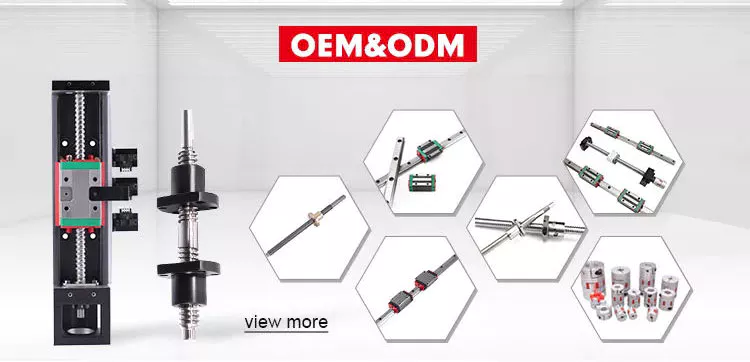
Ball screw nuts
If you have a screw shaft, the last thing you want to worry about is the ball nut slipping off. To prevent this, you can place a temporary stop in the shaft’s grooves to ensure that the ball nut does not slide off. When you remove the stop, you can then install the ball screw nut. But, before you can install the ball screw nut, you have to make sure that you have a good grip on the shaft.
When selecting ball screw nuts, it’s important to consider how much preload you need to apply to avoid excessive backlash. Preloading eliminates this problem by making the ball nut compact. It also prevents backlash, which is lost motion caused by clearance between the ball and nut. Backlash disrupts repeatability and accuracy. This is where spacer preloading comes in. You can insert a spacer between the two ball nuts to transmit the force to the nut. However, you should keep in mind that this method reduces the load capacity of the ball screw.
The critical speed of a screw is the maximum rotating speed before it whips. This critical speed is influenced by several factors, including the diameter of the screw shaft, the number of support elements, and the material. By adjusting these factors, you can reduce the number of components used and the amount of time it takes to assemble the screw shaft. In addition, you can also reduce the number of components and avoid stacking tolerances. However, the critical speed of plastic nuts is limited due to sliding friction.
The ball screw nut has several characteristics that make it unique. Its most prominent feature is the presence of ball bearings. These balls help reduce friction between the screw nut and the shaft. Without ball bearings, the friction would be too high to function properly. Another important characteristic is the groove profile of the nut and ball. These two features ensure that the ball and the nut meet at two points. You’ll be amazed by the results of the work of these ball screw nuts.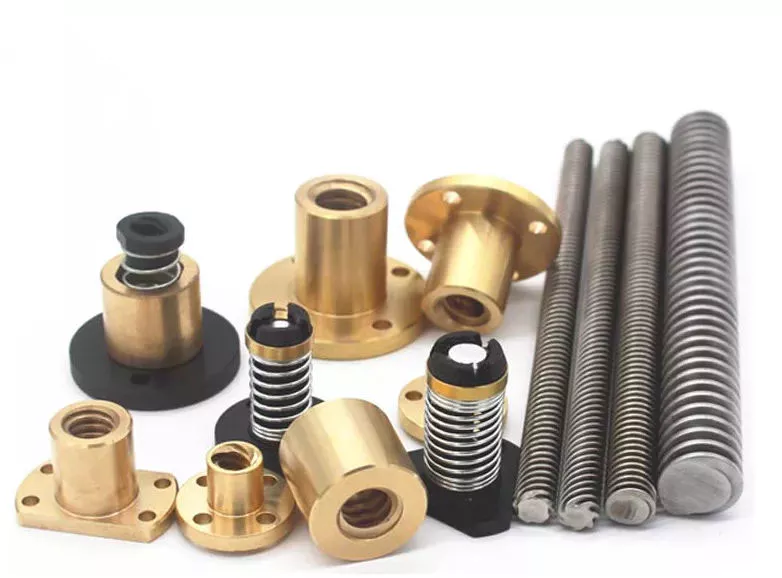
Threaded shank
Wood screws are usually not fully threaded because the shank has an unthreaded portion at the top. This shoulder part forces the screw to compress two pieces of wood, which prevents the screw from overheating and compromising the materials strength. As the screw is threaded partially up, it is not as difficult to remove as a fully threaded screw. However, it is important to note that a wood screw will not hold as tightly as one with a fully threaded shank.
In addition to being universal, screw threads can be of different sizes. For example, a M8 screw has a thread pitch of 1.25 mm. To avoid confusion, screw thread pitches are commonly given with a multiplication sign. For example, M8x1 means that the screw is eight mm in diameter but has a thread pitch of one mm per 360-degree rotation. Those who are not familiar with these dimensions may find it confusing.
The OD of the threaded portion of a bolt is generally smaller than the OD of the nut. If the shank is too deep for the nut to fit, the threads may bottom out. This is why it’s important to use a thread-cutting bit with a small thread diameter. You can use a micrometer or caliper to measure the thread diameter. This tool will also allow you to easily identify which screw size fits where and how well.
The metric system is the most widely used. Fasteners with DIN numbers are generally metric in size. This makes them very useful for industrial settings. You can find metric-sized screws anywhere, as long as you buy them from a reputable manufacturer. These fasteners also come with a dog point, which is used for safety wire. If the screw needs to be replaced, the shank can be drilled with a hole for a safety wire or for a dog-point.
Round head
A round head screw is the most common type used for machine screws. Other common types include truss head, flat head, and hexed head. Each has a different profile and are used for different purposes. A round head screw is typically wider than a flat or a hexed head, and has a slightly rounded surface. These screws are useful for projects involving sheet metal or sheet-metal parts. Round heads are usually slightly wider than a hex head screw, and they may also be used as a substitute for washers in certain applications. However, truss heads are not necessary for every project.
A wood screw has a smooth shank that protrudes above the surface of the material it is attaching. A metal screw has a threaded shaft that is fully threaded from head to point, and a fully threaded shaft provides more bite. Two common head styles are round head and pan head. If the task requires the screw to be flush or countersunk, the round head will be the best choice.
Another type is the Reed & Prince screw drive. These are similar to Phillips screws but have a 75-degree V shape. They are commonly used in marine hardware and are also known as BNAE NFL22-070. This type is also used for steel plate hangers. In addition to round head and pan head screws, there are a variety of other screw types. You can even get a head with a slotted head if you know where to look.
Screw diameters are specified according to the ISO 261 or ISO 262 standards. An M8 screw has a diameter of 8.25 mm. The M8 screw has a pitch of 1.25 mm, which is equivalent to one mm per 360 degrees. There are several other standard screw sizes and thread diameters available. You can find them all by consulting the relevant standards. But remember, the metric system is the most popular.
Self-locking mechanism
A self-locking mechanism for a screw shaft is a device that secures the screw to its supporting member in a failure position. The locking mechanism provides a positive connection between the screw shaft and the control surface during normal operation, and locks the screw to its supporting member when the screw fails. Previous attempts to solve this problem have typically used secondary nuts with free play on the screw, which were intentionally designed to jam when loaded. However, such a device can be unreliable, which is why the present invention offers a more robust and reliable locking mechanism.
The self-locking function of a screw depends on several factors, including its pitch angle and the coefficient of friction of the threads. The angle of friction must be less than the tangent of the material pairing to prevent untightening of the screw. Screws with self-locking mechanisms have an efficiency e lower than 50%, which is less than half. Self-locking screws also have the benefit of being less efficient than a standard screw.
Unlike a normal screw, a self-locking screw can be turned in either direction. The nut 22 rotates with the screw shaft, and the member 23 is translated in an axial direction. Regardless of the direction of the rotation of the screw, this axial translation will result in the opposite moment to that input moment. While screw self-locking mechanisms are typically less expensive, they are more reliable and durable.
Another important feature of self-locking screws is that they are not susceptible to independent loosening. The screw cannot rotate without a certain amount of torque. In addition, a self-locking screw shaft must have a small wedge with a smaller half-angle than the arctangent of the static friction. This means that the torque applied by the driver must be greater than the torque needed to overcome the friction.


editor by czh


