
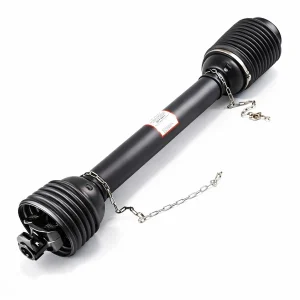
540 to 1000 PTO Drive Shaft With Slip Clutch

The 540 to 1000 PTO Drive Shaft With Slip Clutch provides built-in torque overload protection. The friction-plate clutch releases automatically when torque exceeds the threshold, then re-engages with zero downtime. Ideal for rotary tillers in rocky soil, TMR feed mixers, and snow blowers. Forged yokes, cold-drawn tubes, adjustable slip torque. CE and ISO certified.
Product Overview
A rock hidden in the soil during PTO-driven tillage. A frozen feed slug jammed in the auger. A dense root ball wrapped around a tiller blade. Any of these can send a torque spike through the driveline that destroys a gearbox in a fraction of a second. That's exactly the problem a PTO drive shaft with a slip clutch is built to prevent. The PTO clutch acts as a mechanical fuse, allowing the shaft's two halves to slip relative to each other when torque exceeds a set threshold, absorbing the shock before it reaches the tractor or the implement PTO gearbox.
This 540 to 1000 PTO Drive Shaft With Slip Clutch from Korea Ever-Power PTO Shaft Co., Ltd is engineered for exactly those high-risk PTO applications. The PTO friction-plate clutch mechanism is factory-calibrated to release at a precise torque value, then re-engage automatically once the obstruction clears. No parts break. No downtime. You keep working.
Who Needs a Slip Clutch Shaft?
Operators of rotary tillers in rocky or root-heavy Korean soil. Baler crews working with unpredictable crop moisture. Feed mixer operators who process frozen silage in winter. Municipal snow blower teams who hit curbs and debris under the snow pack. If your implement faces sudden blockages, a PTO slip clutch isn't a luxury, it's insurance against a repair bill that can easily exceed the price of the shaft itself.
Technical Specifications
All specs below are verified from our production records. This product includes an additional "Place of Origin" field compared to some other shaft models in our catalog.
| Parameter | Value |
|---|---|
| Function | Drive Shaft Parts & Power Transmission |
| Use | Kinds of Tractors & Farm Implements |
| Yoke Type | Double push pin, Bolt pins, Split pins, Pushpin, Quick release, Ball attachment, Collar |
| Processing Of Yoke | Forging |
| Plastic Cover | YW; BW; YS; BS; Etc |
| Color | Green; Orange; Yellow; Black Ect. |
| Series | T1-T10; L1-L6; S6-S10; 10HP-150HP with SA, RA, SB, SFF, WA, CV Etc |
| Tube Type | Lemon, Triangular, Star, Square, Hexangular, Spline, Special Ect |
| Processing Of Tube | Cold drawn |
| Spline Type | 1 1/8" Z6; 1 3/8" Z6; 1 3/8" Z21; 1 3/4" Z20; 1 3/4" Z6; 8-38*32*6; 8-42*36*7; 8-48*42*8 |
| Place of Origin | China |
How the Slip Clutch Mechanism Operates
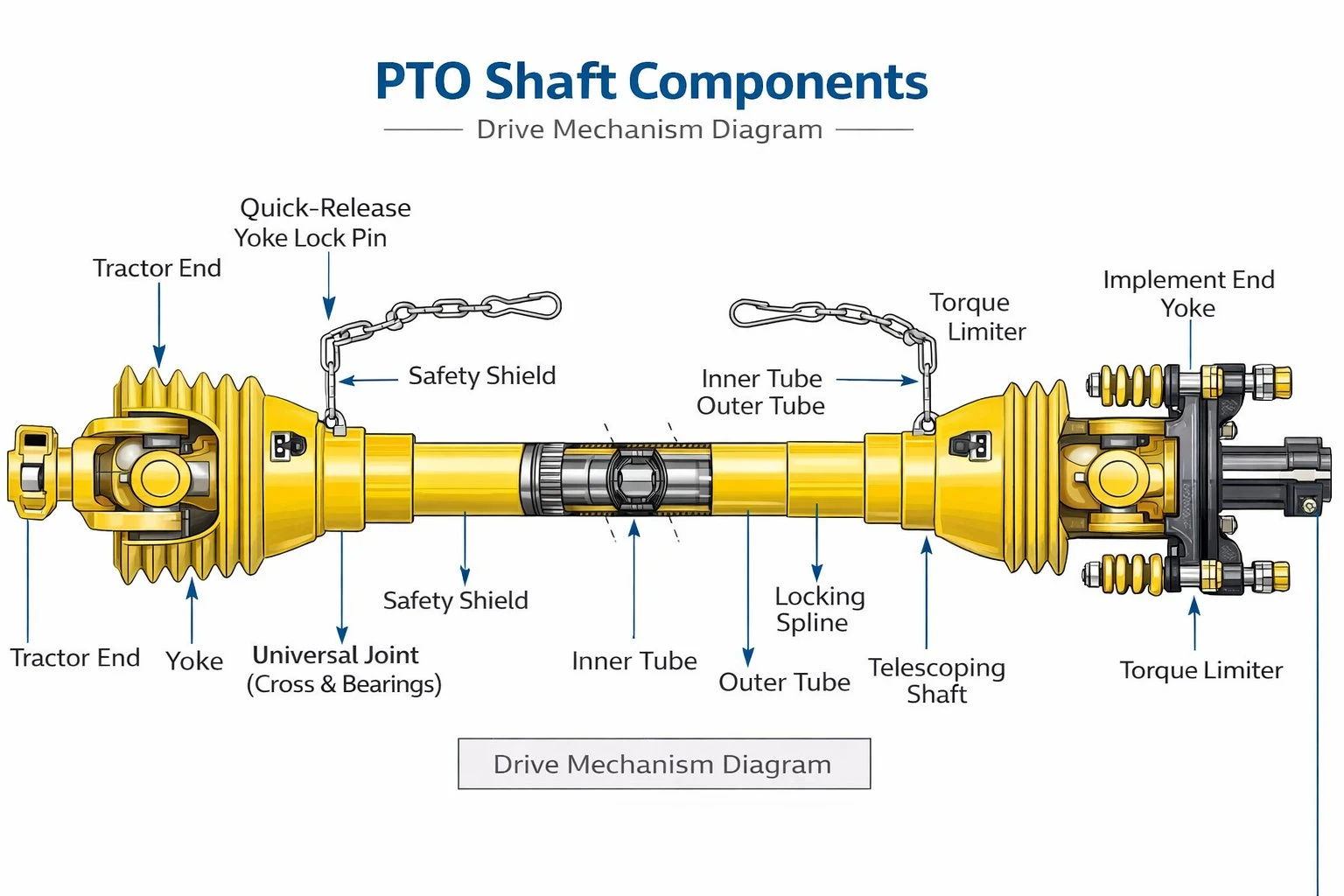
The 540 to 1000 PTO Drive Shaft slip clutch sits on the implement end of the PTO shaft, between the outer yoke and the telescoping tube. Understanding what happens inside helps you set it correctly and troubleshoot if something feels off.
Friction Plates and Spring Pressure
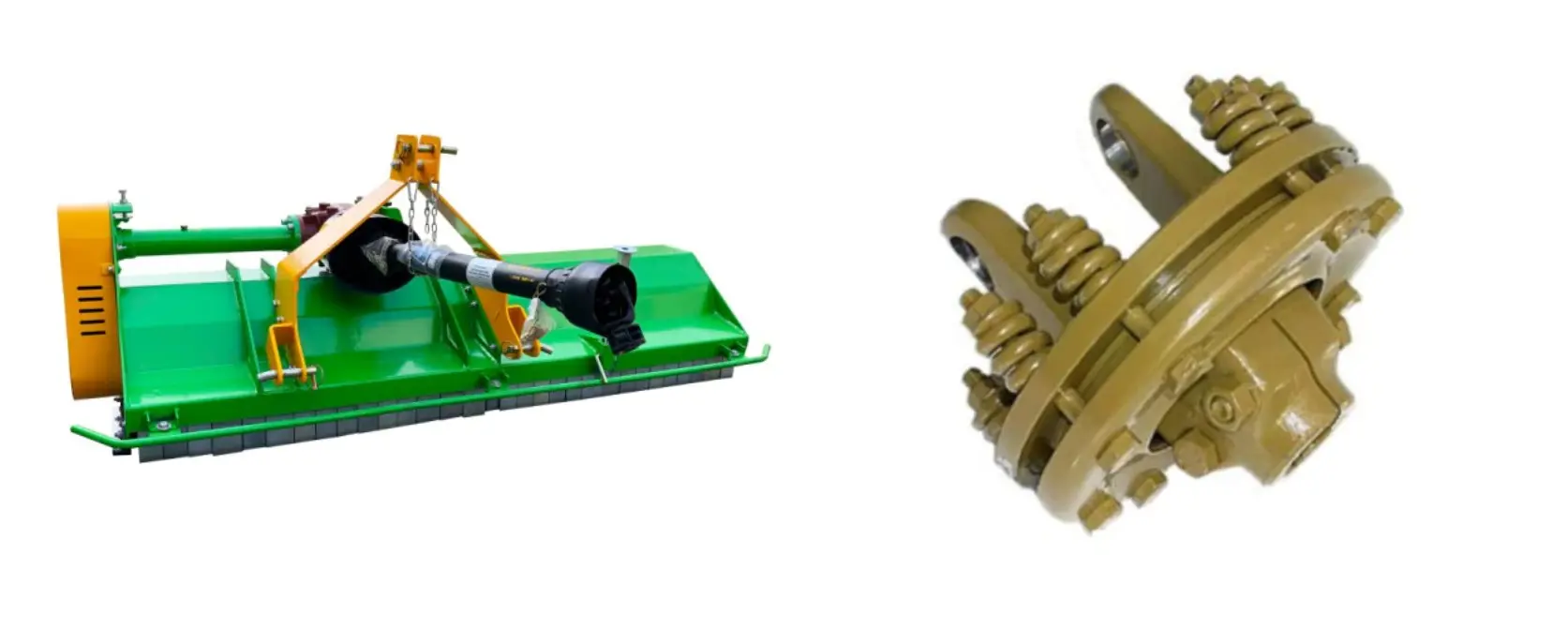
Two or more friction discs are sandwiched between pressure plates inside the clutch housing. Heavy-duty springs compress the stack, creating friction that transmits torque from the driving side to the driven side. Under normal load, the plates grip and rotate together as a solid unit. When torque spikes past the calibrated limit, the plates overcome the spring pressure and begin sliding against each other. The shaft continues spinning, but the implement PTO side slows or stops, absorbing the shock. Once the obstruction clears and torque drops, the springs re-engage the plates and normal operation resumes.
Adjusting the Slip Torque
The clutch bolts pass through the springs. Tightening them increases spring compression and raises the slip threshold. Loosening them lowers it. Most operators set the clutch to slip at roughly 120 to 150 percent of the implement's normal operating torque. Setting it too tight defeats the purpose since the clutch won't release before damage occurs. Setting it too loose causes constant slipping during normal work, which overheats the friction plates and shortens their life.
Slip Clutch vs. Shear Bolt: Choosing the Right Protection
Both slip clutches and shear bolts protect the driveline, but they work in different ways and suit different situations. Here's a direct comparison to help you decide which is right for your application:
| Feature | Slip Clutch (Friction) | Shear Bolt |
|---|---|---|
| How it releases | Friction plates slip, then re-engage automatically | Bolt breaks, requiring manual replacement |
| Downtime after trip | Zero. Auto-reset once obstruction clears | 5 to 15 minutes to replace the bolt |
| Best for | Frequent overloads (tillers, mowers, mixers) | Rare overloads (augers, balers) |
| Wear item | Friction plates (replace every 1 to 3 seasons) | Shear bolts (carry spares in the field) |
| Torque precision | Adjustable via spring tension | Fixed by bolt material and diameter |
For most agricultural PTO shaft applications in Korea where rocky soil and variable crop conditions make overloads common, the 540 to 1000 PTO Drive Shaft with slip clutch is the preferred choice because it doesn't require stopping to replace a broken bolt every time the implement hits something.
Replacing Friction Plates: When and How
Friction plates are the one wear item in the 540 to 1000 PTO Drive Shaft slip clutch system in a slip clutch system. They last one to three seasons depending on how often the clutch activates. Here are the signs that replacement is due and the steps to do it:
Signs of Worn Plates
- ● The clutch slips during normal operation even though bolts are properly tightened
- ● Burning smell from the clutch housing area after moderate work
- ● Visible glazing or thinning when plates are inspected
- ● Clutch engages unevenly (jerky re-engagement after slipping)
Replacement Procedure
Disconnect the shaft from both tractor and implement. Remove the clutch bolts and springs carefully, noting their position. Slide out the old friction plates and power plates. Clean the housing interior. Install new plates in the same order as the originals. Reassemble with springs and bolts, tightening evenly to the specified torque. Mark the bolt positions with a paint pen so you can spot any rotation during future checks.

Companion Products
How the Slip Clutch Shaft Connects to Your Gearbox
The 540 to 1000 PTO Drive Shaft transfers torque to the agricultural gearbox mounted on your implement. The gearbox converts PTO rotation into the speed and direction the working mechanism requires. The slip clutch sits between the shaft and the gearbox input, so when it activates, it protects the gearbox internals from the overload. The gearbox input spline and the shaft's implement-end yoke spline must match for a clean connection. When you order, specify both spline configurations and we'll verify compatibility before shipping.

Spare Parts Availability
Replacement friction plates, springs, pressure plates, cross-bearing kits, safety shields, and individual yokes are stocked in our Korea warehouse. Keeping a spare set of friction plates on hand is strongly recommended for operators in rocky-soil regions where the clutch activates frequently.

Why Farms Choose This Slip Clutch Shaft
- ✔ Auto-reset clutch means zero downtime after an overload event
- ✔ Factory-calibrated slip torque with field-adjustable spring tension
- ✔ Forged 40Cr yokes and cold-drawn tubes, same quality as non-clutch models
- ✔ Covers 540 to 1000 RPM with appropriate spline yoke selection
- ✔ CE, ISO 9001, TS/16949 certified production
- ✔ Korea warehouse keeps common slip clutch models in stock
- ✔ Pricing 30 to 45 percent below equivalent OEM slip clutch shafts

Frequently Asked Questions
What torque does the slip clutch release at?
It depends on the series and spring setting. Our most common models slip at 800 to 2500 Nm. The factory default is set to approximately 130% of the rated continuous torque for each series. You can adjust it in the field by tightening or loosening the clutch bolts.
How long do friction plates last on a PTO shaft slip clutch?
One to three seasons depending on how often the clutch activates. Operators tilling rocky soil may need yearly replacement. Those on clean, level fields may get three or more seasons from a single set.
Can I add a slip clutch to an existing standard PTO shaft?
Not directly. The clutch housing replaces the implement-end yoke section, which requires a factory assembly. It's best to order the complete shaft with the clutch pre-installed for correct alignment and calibration.
Should the slip clutch go on the tractor end or implement end?
Always on the implement end. Mounting it on the tractor side exposes the spring bolts near the operator, creating a safety hazard. The implement end keeps the clutch mechanism away from the driver.
Does the slip clutch work at both 540 and 1000 RPM?
Yes. The friction mechanism is RPM-independent; it responds to torque, not speed. Select the correct spline yoke for your PTO speed and the clutch handles the rest.
My slip clutch keeps slipping during normal operation. What's wrong?
Either the springs are too loose (tighten the clutch bolts evenly) or the friction plates are worn and need replacement. Check the bolt torque first. If tightening doesn't fix it, inspect the plates for glazing or reduced thickness.
Customer Feedback
Oh Sang-hoon, Rotary Tiller Operator, Chungcheongnam-do (spring 2025)
"Our fields have limestone chunks just below the surface. Before this slip clutch shaft, we cracked two gearbox housings in one year. Since installing it seven months ago, the clutch has tripped maybe a dozen times and the gearbox is untouched. Best purchase we've made."
Kim Young-soo, Feed Mill Supervisor, Gyeonggi-do (late 2024)
"TMR mixer jams in January are a fact of life with frozen silage. The friction clutch lets the shaft slip without breaking anything. Last winter we had zero gearbox repairs for the first time in four years."
Noh Ji-won, Municipal Snow Removal, Gangwon-do (winter 2024)
"Snow blowers hit hidden curbs and manhole covers all the time. The shear bolt version meant stopping to replace a bolt every few hours. The slip clutch just releases and re-engages. Productivity went up noticeably."
Park Hee-jung, Contract Farmer, Jeollanam-do (mid 2024)
"I run a T6 series with slip clutch on a 70 HP tractor pulling a stone burier. The clutch trips once or twice per field pass and re-engages instantly. Friction plates still look good after one full season."
Lee Kwan-ho, Equipment Dealer, Daegu (fall 2024)
"I recommend the slip clutch version to every customer buying a rotary tiller shaft. It adds some cost upfront but saves them a gearbox replacement down the road. My return rate on these is zero."
Packing and Shipping

Additional information
| Editor | Cxm |
|---|
Related products
-
W2100 Series PTO Shaft Replacement of Walterscheid
-
PTO Shaft for New Holland BigBaler 330 340 Balers
-

PTO Shaft for Krone Round Balers | CV Joint Option
-
PTO Shaft for John Deere Round Balers
-

G Series PTO Shaft Spline Tube | G2 to G50 Models
-
S Series PTO Shaft Star Tube | Heavy-Duty Driveline
-

Triangular PTO Shaft for Agricultural Equipment
-

Tractor PTO Shaft | Agricultural Drive Shaft


